
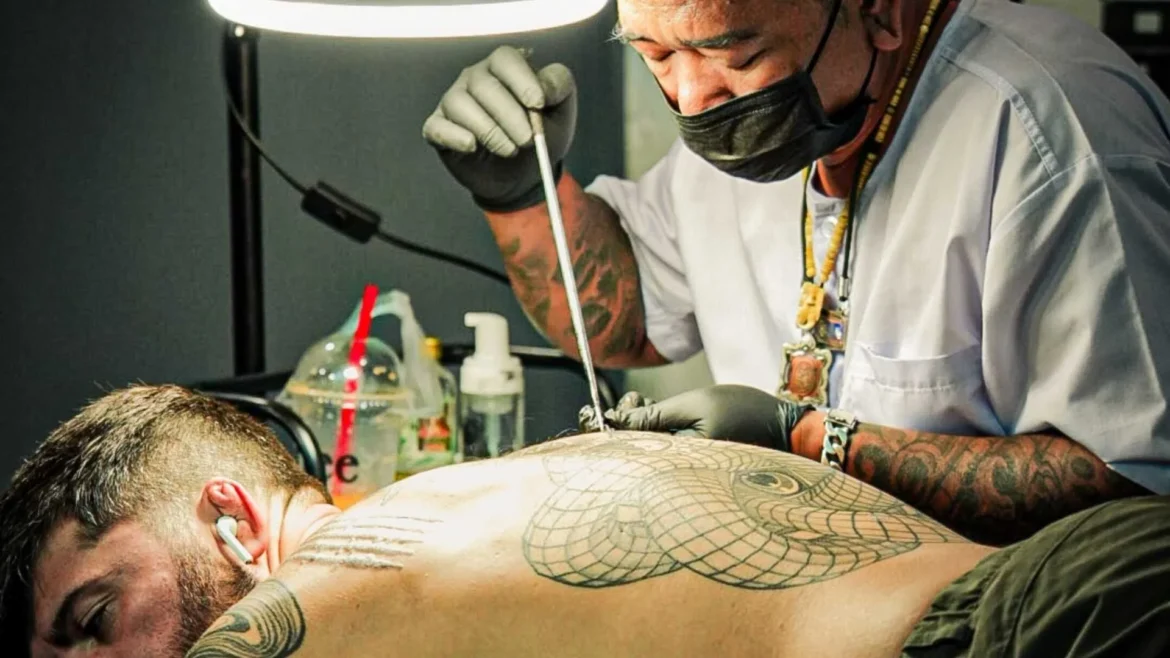
More than ink on skin, a SakYant marks a promise made deep within. Born from old beliefs blending Buddhist calm with wild forest spirits across Thailand and Cambodia, each design arrives through hands trained long by a monk or master – tapping ancient symbols into flesh. Energy flows in during the rite, said to guard, empower, and guide.
Yet such power asks something back. A quiet balance forms. Each mark ties to duties, unwritten but firm: choices shaped by respect, restraint, presence. Break that trust, and the strength may fade. If you are looking for the best bamboo tattoo in Phuket, you must get a professional.
What Are the Sacred Rules?
Although the rules can be different according to the master or temple, most people receiving SakYant are provided with a basic set of moral codes. These often include:
- Do not tell lies: It is about being truthful and keeping spiritual integrity.
- Steal not: The respect for the property of others strengthens karmic balance.
- Killing (or harm to living things): A teaching that is in line with Buddhist compassion.
- Avoid adultery and sexual misconduct: Be pure in heart and deed.
- Never talk negative about your parents, more so your mother: This is a very strong cultural belief among Thai people.
These precepts are not random, but rather reflect the Five Precepts of Buddhism and are designed to help the wearer lead a disciplined and mindful life.
The importance of these rules
The efficacy of a SakYant tattoo is considered to be not only with the help of the sacred geometry and the chants, but also with the conduct of the person who wears it. That is, the tattoo is in concert with what you do.
Violating the rules is believed to:
- Weaken the protective power of the tattoo.
- Bring bad omen or misfortune.
- Break the spiritual connection with the master who blessed it.
It is not mere symbolism to believers, but a living spiritual accord. Getting the best tattoo artist in Phuket will ensure the quality of your tattoo designs.
Weight and Respect Culture
The ceremony of being given a SakYant is very humble. It is usually accompanied by rituals, offerings, and a blessing ceremony, and during this, the master chants and activates the tattoo. This is not equated with acquiring a design at a normal studio.
This is the reason why a lot of traditional practitioners stress:
- Knowing the purpose of the design you have chosen.
- Adoring the master and his lineage.
- Adherence to the rules is not due to fear, but due to respect.
The casually attitude towards SakYant or neglect of its cultural origins may be interpreted as disrespect.
What is the Consequence of going Against Rules?
No formal punishment exists, but according to the belief system, the punishment is spiritual and not physical. Others complain that it seems their tattoo is losing its power, and they even think that it could result in bad things.
In others, people go to their master to be re-blessed or undergo some rite in order to replenish the power of the tattoo. This is, however, not a sure solution and, in most cases, relies on the goodwill of the person.
Before getting a SakYant, there are tips to consider
When you are thinking of one, think it over:
- Study your master: Select an ajarn or monk who has a good reputation and is of pure lineage.
- Know the commitment: These rules are to be adhered to forever.
- Consider your values: Be sure you are ready to put your practice into conformity with the precepts.
- Appreciate the culture: Do not think of it as a mere fashion or style.
The SakYant tattoo has much more than simply an ink meaning. It is an art, spirituality, and discipline. The holy regulations are not commands; they are a kind of road map on how to live so that you can be a blessing.
Snap them, and the tattoo can be simply that, ink without purpose.